
Escenario (Proceso comentado)
by Daniel Benítez @dabntz
- 2,630
- 33
- 7

Starr Mazer es un videojuego de ciencia ficción de estilo point-and-click en el que colaboro creando escenarios pixel art. Si estáis familizarizados con los (increíbles y súper recomendados) juegos de la compañía LucasArts, este tipo de diseños no os resultará extraño.

Voy a usar este proyecto para explicar de forma sencilla dos cuestiones importantes suelo preguntarme antes de afrontar el escenario para un videojuego como Starr Mazer.
La primera cuestión sería: ¿Qué ocurre en este escenario durante el juego (o, mejor dicho, durante el gameplay)?
Esta pregunta es súper importante, ya que según lo que ocurra en el gameplay, estructuraré el escenario de una forma u otra. En definitiva, mi misión a la hora de diseñar escenarios es cumplir los objetivos del gameplay: esconder las piezas de un puzle, guiar al jugador hacia un camino, hacer que caiga en una trampa, etc.
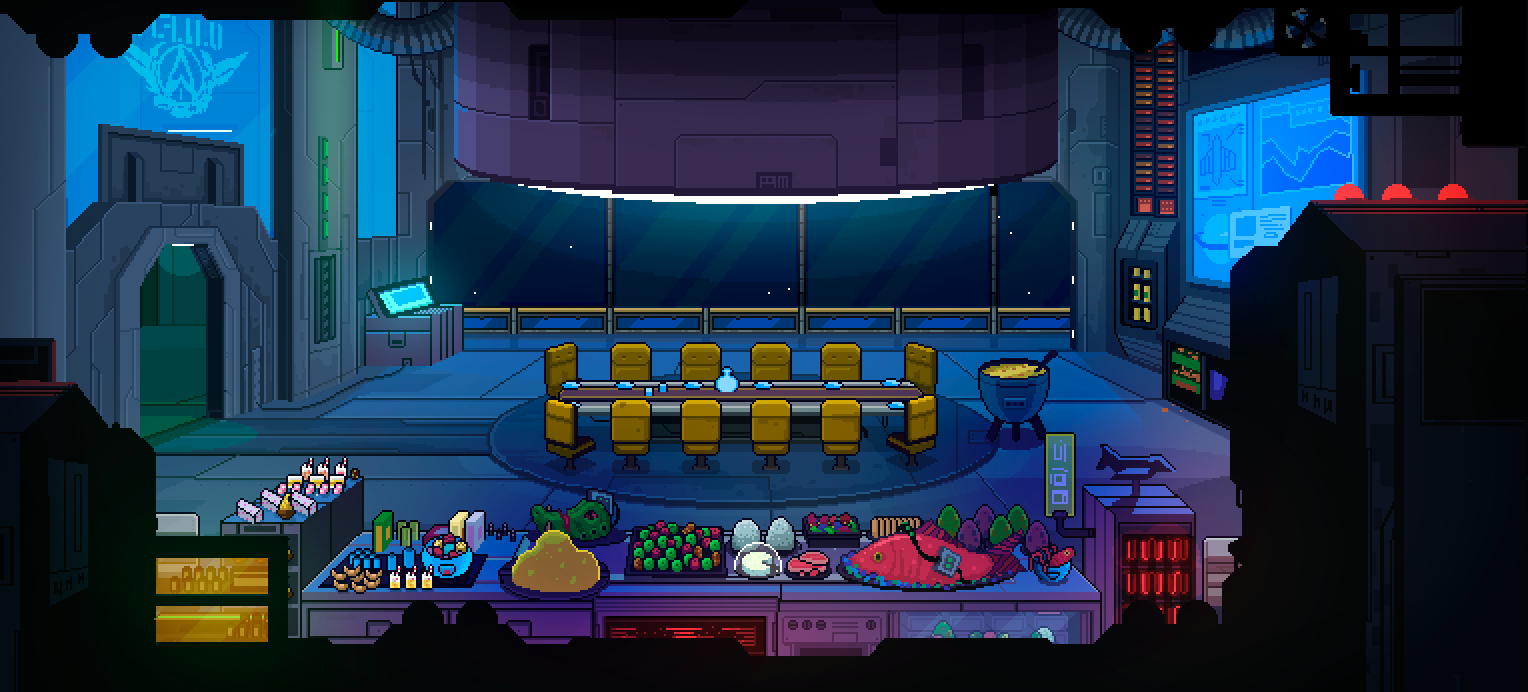
Pongo un ejemplo. Imaginemos que el diseño de gameplay de este escenario indicara lo siguiente: "el jugador debe dirigirse hacia uno de los asientos amarillos que hay en el centro del escenario y sentarse en él". Para invitar al jugador a sentarse, yo realizaría un par de cambios en el escenario.
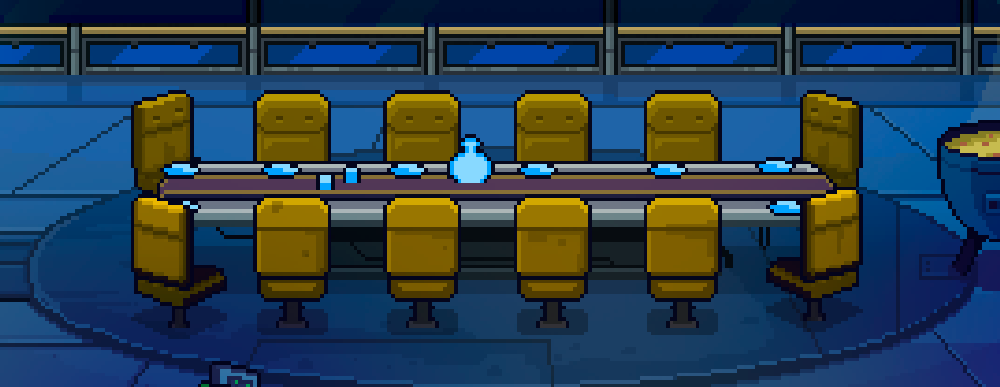
Primero, eliminaría los asientos diagonales de las esquinas de la mesa para crear una sensación de orden entre todos los asientos. Luego, rompería ese orden rotando levemente hacia fuera un sólo asiento. Así invitaría al jugador a dirigirse hacia este asiento, ya que sería el único que no sigue el patrón del resto de asientos: mirar hacia el interior de la mesa. ¡Así de sencillo!
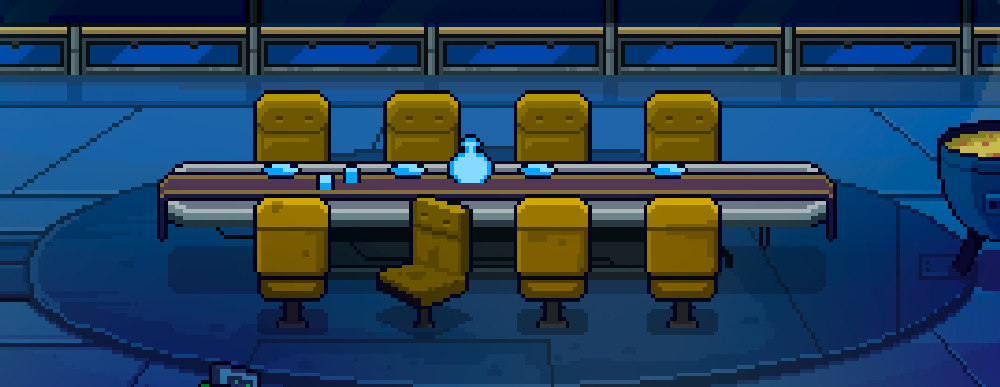
Una vez tenemos el diseño de gameplay en la cabeza, entra en juego la segunda cuestión: ¿Cómo estructurar el escenario según el diseño de gameplay propuesto?
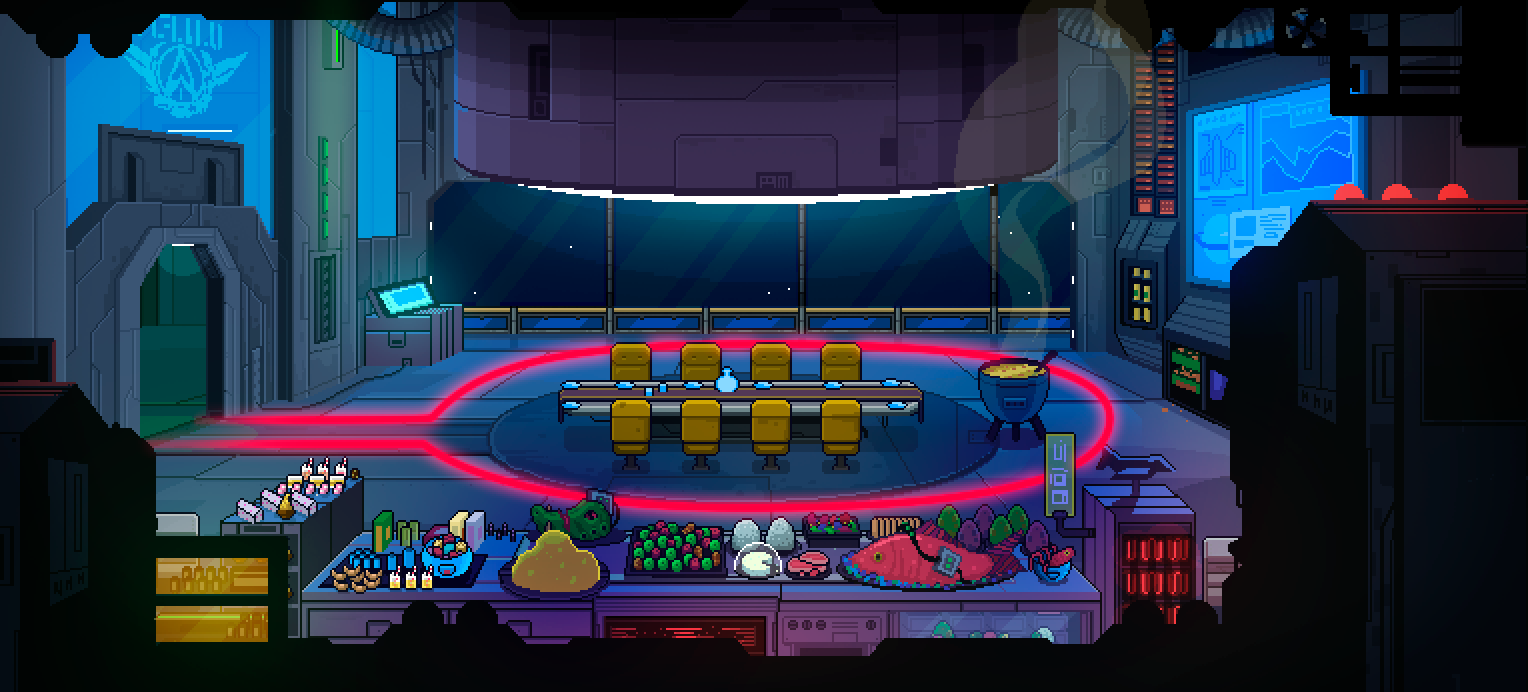
En este caso, el proyecto estaba muy abierto en lo que a diseño de gameplay se refiere. Había mucha libertad de creación en este escenario. Las instrucciones eran básicamente crear un comedor exclusivo para pilotos de la nave e incitar al jugador a explorar la zona, hablar con los NPCs que allí se encuentren, conseguir algo de información y volver tras sus pasos. Nada más.
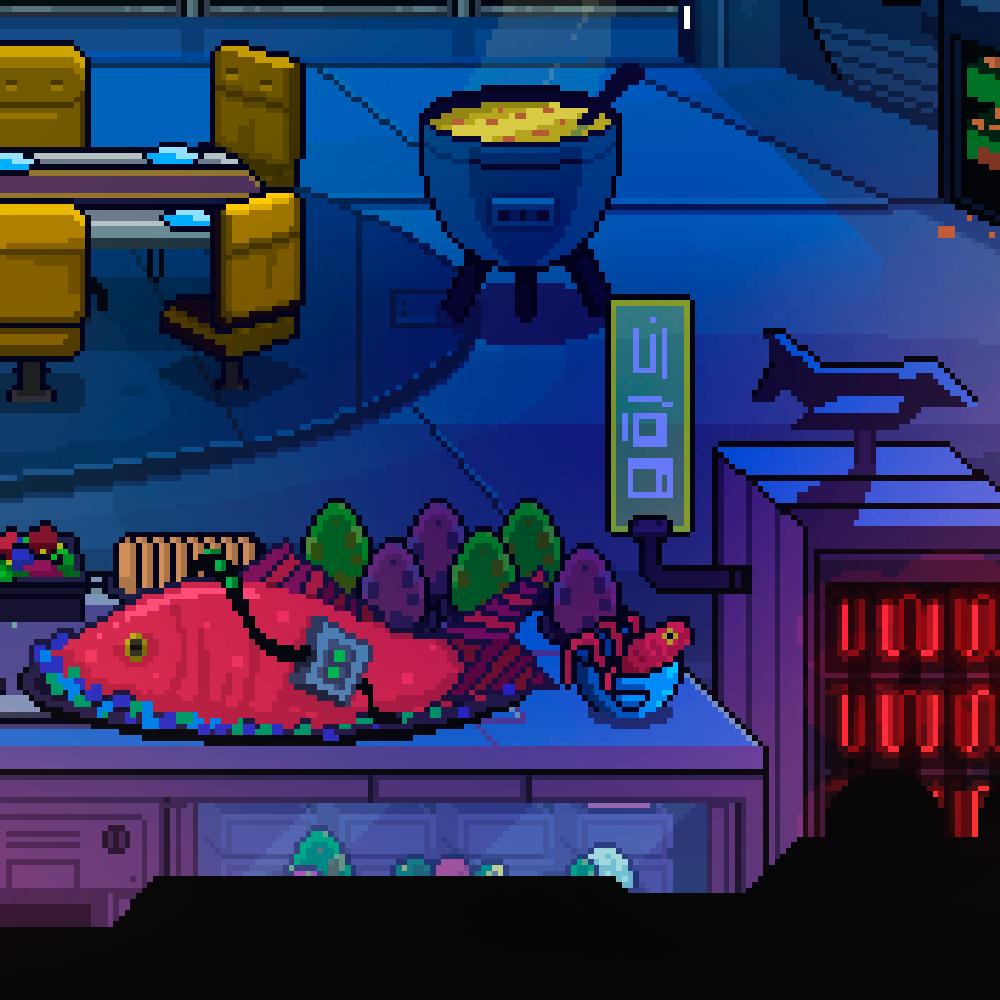
Por esto, creé la localización de forma circular, usando una perspectiva bastante sencilla de explorar. De esta forma, el jugador (probablemente) se paseará rodeando la mesa, interactuando con lo que se encuentre alrededor, y saliendo por donde vino.
Por supuesto, existen muchísimas otras preguntas que surgen a la hora de afrontar un escenario para videojuegos, pero en este proyecto quería destacar estas dos cuestiones principales ya que son las que realmente tengo en la cabeza siempre durante los primeros pasos de la creación.



7 comments
tremendo trabajo!!! me encanta, felicidades!!
@frydark_z ¡Muchas gracias, me alegro que te guste!
Qué nostalgia despiertan estas imágenes.. Está tremendo!
@eloyeah :) Sí, este tipo de escenarios rinden homenaje en cierta manera a videojuegos que todos/as hemos disfrutado hace algunos añitos ya: Monkey Island, Space Quest...
Hola, me gusta. ¿Qué programa utilizas para hacer los pixelart de los escenarios? ¿Están hechos en capas?
@cristiangodoy ¡Hola! Para escenarios de este tipo uso Adobe Photoshop. Me ayuda a organizarme ya que, efectivamente, suelo usar muchas capas a la hora de crear escenarios grandes y con detalle :)
@dabntz Quiero aprender. Gracias.
Log in or join for Free to comment