


The history of the IKEA catalog: 70 years of design, culture and creativity in print.

Discover the evolution of the IKEA catalog, an icon of design and visual culture for 70 years, from its origins to its latest printed edition.
.
From its first issues in the 1950s to the last printed edition in 2021, the catalog was conceived, written and produced in Älmhult, Sweden, the very place where IKEA was born. Each page reflects the evolution of the home, fashion in interior design and changes in society, becoming a benchmark of democratic design and visual storytelling.
This article explores the history of the catalog, its aesthetic evolution, its leap into the digital environment and its cultural legacy, showing how a seemingly simple publication managed to influence generations of designers, photographers and creatives.
The origins: Ingvar Kamprad's dream.
In the 1950s, Ingvar Kamprad, founder of IKEA, personally wrote the catalog texts. The idea was clear: democratize design, bringing beautiful, functional and affordable furniture into every home.
The first editions were simple, without people in the pictures and with a sober presentation, but they already showed the essence of IKEA: closeness, functionality and Scandinavian style. This approach laid the foundation for a publishing project that would eventually become a symbol of modern home culture.
The rise of the catalog: from commercial tool to cult object.
During the 1970s, 1980s and 1990s, the catalog went from being a sales tool to a cult object. Editorial photography, graphic design and the layout of each page received meticulous attention: typography, lighting, color and framing were taken care of in detail.
The IKEA catalog was massively distributed, becoming one of the most widely read publications in the world, surpassing even the Bible in annual print runs. Every page invited you to imagine a more functional, cozy and aesthetic home, beyond the act of buying furniture.
In the 1970s, children playing in the rooms, adults smoking and even political details appeared in some spaces, reflecting the culture and spirit of the times.
In the 80s, homes adopted more sophisticated trends with bright fabrics and modern materials.
In the 1990s, aesthetics returned to simplicity and Scandinavian tradition.
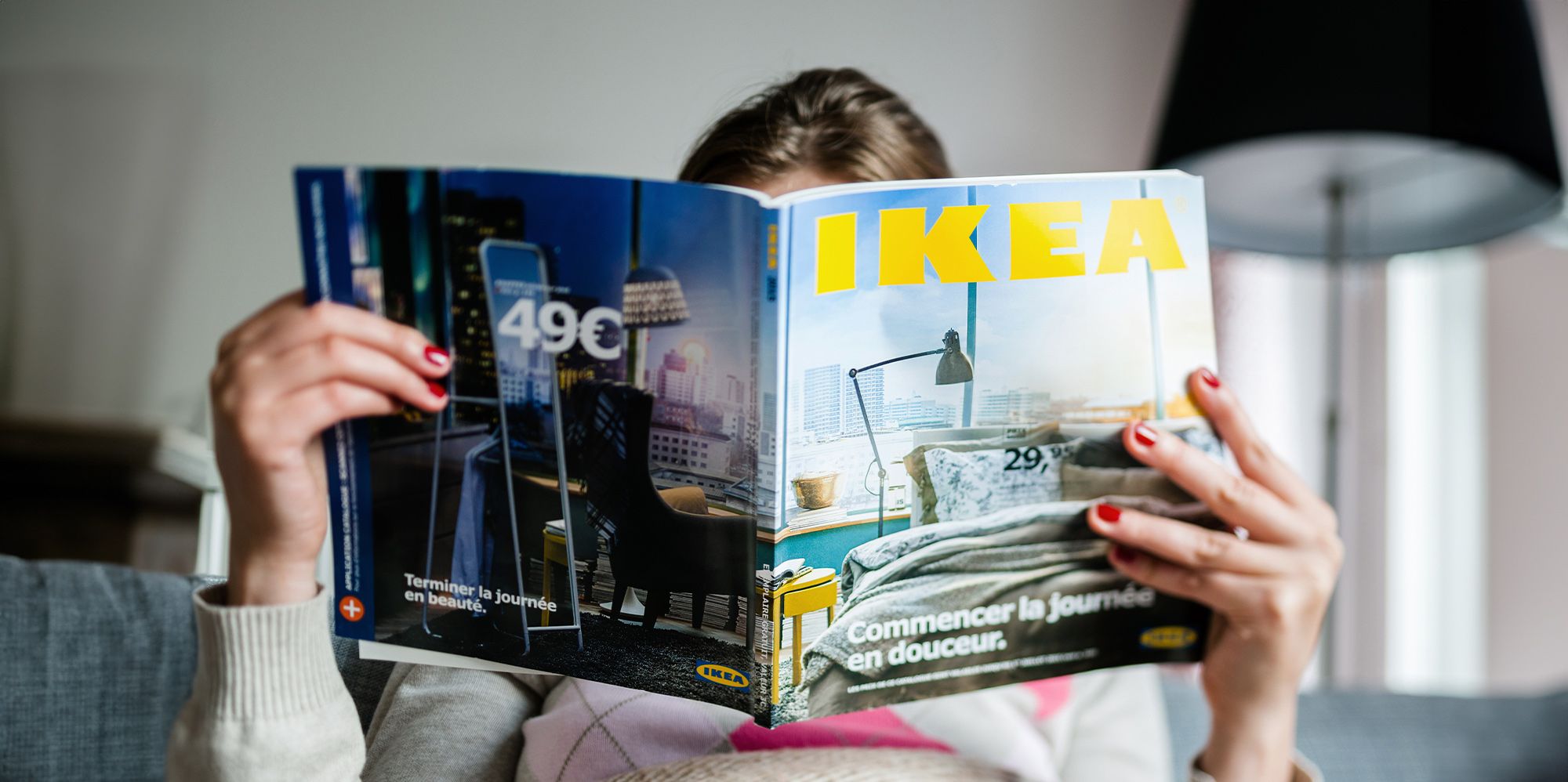
IKEA aesthetics: design for everyone.
The catalog reflected the brand's democratic design philosophy:
- Functional, beautiful and accessible products.
- Introduction of modular design, minimalism and space efficiency.
- Adaptation of aesthetics to new trends without losing identity.
- Incorporation of infographics, visual guides and real environments that connected emotionally with readers.
The catalog became an example of how to combine marketing, design and visual storytelling, inspiring industry professionals for decades.
The leap to the digital environment.
In the 2000s, IKEA explored digital and interactive versions of the catalog, including 3D experiences and augmented reality tools. This made it possible to replicate the experience of exploring the physical catalog from any device, while maintaining interaction with the spaces and products.
Still, nostalgia and the value of paper ensured that the printed catalog remained relevant for years to come, until the last physical edition was published in 2021.

The end of one era (and the beginning of another).
The announcement of the end of printed catalog production in 2020 marked a milestone in IKEA's history. This change reflected the transition of communication from paper to digital, adapting to new consumer habits.
Today, the catalogs are preserved as cultural archives documenting seven decades of home, design and daily life history, becoming true time capsules that tell the story of the evolution of the modern lifestyle.

The legacy of the IKEA catalog.
Beyond its commercial function, the catalog taught visual storytelling, emotional branding and editorial design. It inspired generations of creatives, photographers and designers to:
- Present products aesthetically and functionally.
- Create environments that told stories.
- Connect emotionally with the audience through design and photography.
[It remains a reference in editorial design for its balance between functionality and aesthetics, and as an example of how a marketing project can transcend and become a visual culture.
The IKEA catalog was much more than a brochure: it was an art form applied to everyday life, capable of inspiring, educating and moving millions of people. To explore the entire history and browse through the catalogs over the years, visit the IKEA Museum.


0 comments